

Introduction
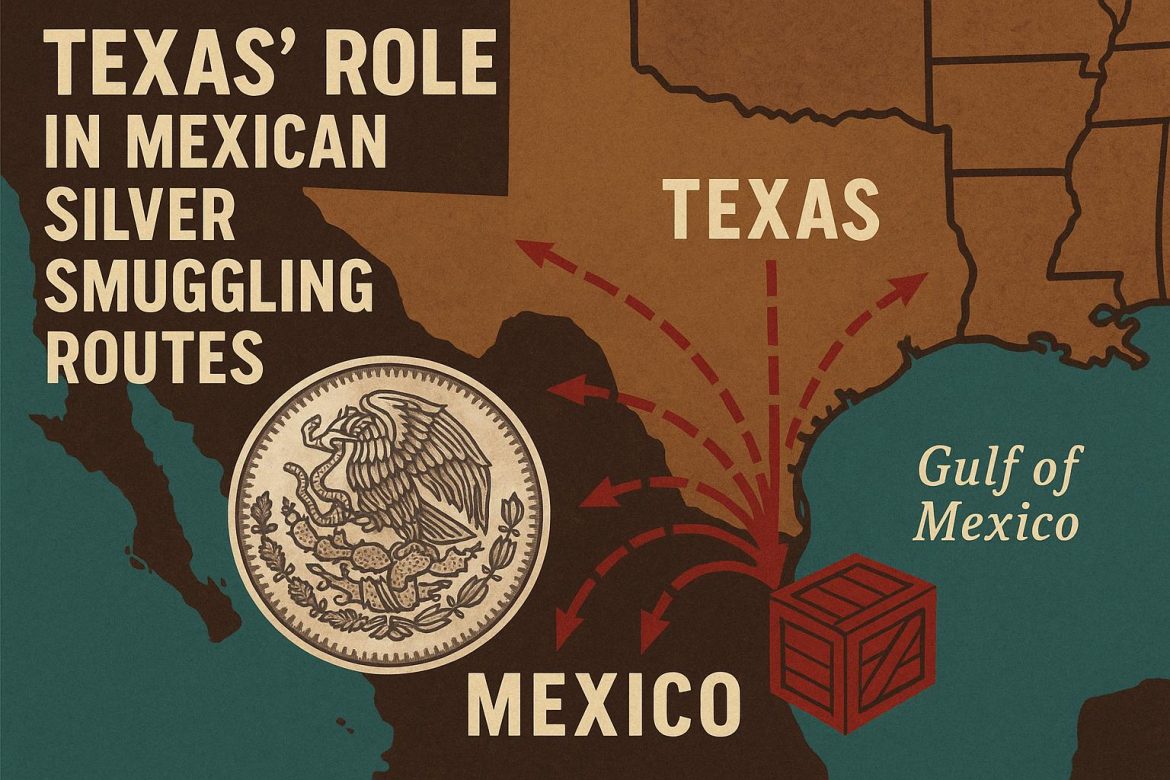
During the 19th century, Texas played a pivotal role in the smuggling of Mexican silver. The region’s strategic location made it a critical part of illicit trade routes. This article explores the historical context and the factors that contributed to Texas’s involvement in the silver smuggling trade.
Historical Context
In the 1800s, Mexico was one of the world’s leading producers of silver. However, due to political instability and economic pressures, large quantities of silver were smuggled out of the country. Texas, which shared a long border with Mexico, became a key player in these smuggling routes as it transitioned from a Mexican territory to a U.S. state. During this period, various political entities and groups took advantage of the surrounding chaos, facilitating the illegal trade.
The Role of Geography
The geographical features and location of Texas were instrumental in its role in the silver smuggling networks. As a state characterized by its vastness and variety of territory, Texas offered smugglers a multitude of options for secretive movement. The state’s magnificent expanse, coupled with rugged and often inaccessible terrains, provided numerous clandestine paths that were perfect for illicit transport activities.
A major key to the smuggling operations was the Rio Grande River, serving not only as a natural boundary between the United States and Mexico but as a strategic corridor for smugglers. It represented a boundary that was difficult to patrol effectively, enabling those involved in smuggling to discreetly move silver and other contraband goods across borders with relative ease.
Key Smuggling Routes
Within the intricate web of smuggling routes, Texas had several crucial paths linking the important Mexican mining operations to lucrative markets in the United States. Prominent towns such as San Antonio and El Paso emerged as substantial transit points largely because of their advantageous positions close to the border and their well-established trade infrastructure at the time. These towns became hubs, not just for the movement of silver, but as key elements in broader networks of trade and communication.
El Paso, in particular, benefited from its proximity to numerous mining sites in northern Mexico and its increasingly connected local economy, making it an ideal convergence point for smuggling activities. San Antonio was similarly significant due to its historical role as a regional center and its established routes that spread outward to other trade destinations in Texas and beyond.
Economic and Political Drivers
The smuggling of Mexican silver was driven by a complex interplay of economic incentives and political circumstances. Economically, silver was an exceptionally high-value commodity sought after across global markets, making smuggling a lucrative endeavor. Smugglers could reap substantial financial rewards from the sale of illegally sourced silver, which provided a powerful motivation for continued activity.
Politically, the early 19th century was a period marked by significant upheaval in Mexico. The Mexican War of Independence and subsequent domestic conflicts contributed to widespread instability, which, in turn, weakened enforcement mechanisms and created conditions where smugglers could operate with relative impunity. The chaos and disruption enabled by political transitions were expertly exploited by those seeking to capitalize on cross-border trade opportunities.
Key Players and Methods
The mechanics of silver smuggling involved various players and diverse methods aimed at circumventing law enforcement. Individual entrepreneurs and well-organized criminal networks alike played significant roles in the smuggling trade. These groups were often supported by corruptible local officials who either turned a blind eye or were active participants due to the bribes they received.
Tactics employed by the smugglers were as varied as the individuals involved. Bribery was a common tool, smoothing the path for illegal activities at various checkpoints. False documentation was another crucial method, allowing smuggled silver to pass as legitimate cargo. In addition, diversionary tactics, such as misdirecting law enforcement and using false trails, helped smugglers evade capture and continue their operations unimpeded.
Impact on Texas and Beyond
The persistent influx of smuggled silver brought about significant economic and social impacts across Texas and extended into the broader U.S.-Mexico border region. Economically, the inflow of silver contributed to local growth and bolstered financial opportunities in specific areas, stimulating trade and infrastructure development. Towns along the smuggling routes often saw increased commercial activity and diversification as a result of the associated trade boon.
However, this smuggling also engendered corruption and a level of lawlessness that posed continual challenges to authorities in both Mexico and Texas. The widespread illicit activities undermined legal trade systems and complicated efforts to establish and maintain order. It took substantial efforts by political and law enforcement entities on both sides of the border to tackle the embedded networks of smugglers and their accomplices.
Conclusion
Texas’s role in the smuggling of Mexican silver during the 19th century highlights the close interaction between geography, politics, and economics in shaping cross-border trade dynamics. The historical complexity of managing these issues reflects the ongoing challenges faced by regions where geographical borders intersect with economic incentives and political opportunities. Understanding this period in Texas’s history provides a deep insight into how illicit trade operates and evolves when state governance is pitted against enterprising illicit markets.
For those interested in delving deeper into these historical aspects, exploring archival documents and resources available at regional libraries and historical societies can offer further context and detail to the intriguing stories of 19th-century smuggling and cross-border dynamics.