

The Geology of Texas Hill Country
The Texas Hill Country, a region celebrated for its distinctive landscapes and varied geological characteristics, presents a captivating chronicle when examining its mineral deposits. Located in the heart of Texas, the Hill Country is characterized by its rugged and picturesque terrain. This area is primarily composed of limestone and granite, with a substantial presence of caves that have formed through a process known as karstification, which has taken place over millions of years. These caves, hidden beneath the rolling hills, potentially harbor significant deposits of minerals, including precious metals such as gold and silver.
The Formation of Caves
In the Texas Hill Country, the formation of caves is a fascinating natural process worthy of exploration. The predominant type of caves found in this region are limestone caves. Limestone is a sedimentary rock, primarily composed of calcium carbonate. Over extended periods, slightly acidic water, often originating as rainwater absorbing carbon dioxide from the atmosphere and soil, seeps through the ground, slowly dissolving the limestone. This dissolution process leads to the creation of subterranean voids and passageways, resulting in the fascinating cave systems that are observed today. These caves, besides being geological wonders, sometimes create environments conducive to the concentration of mineral deposits.
Gold and Silver Deposits
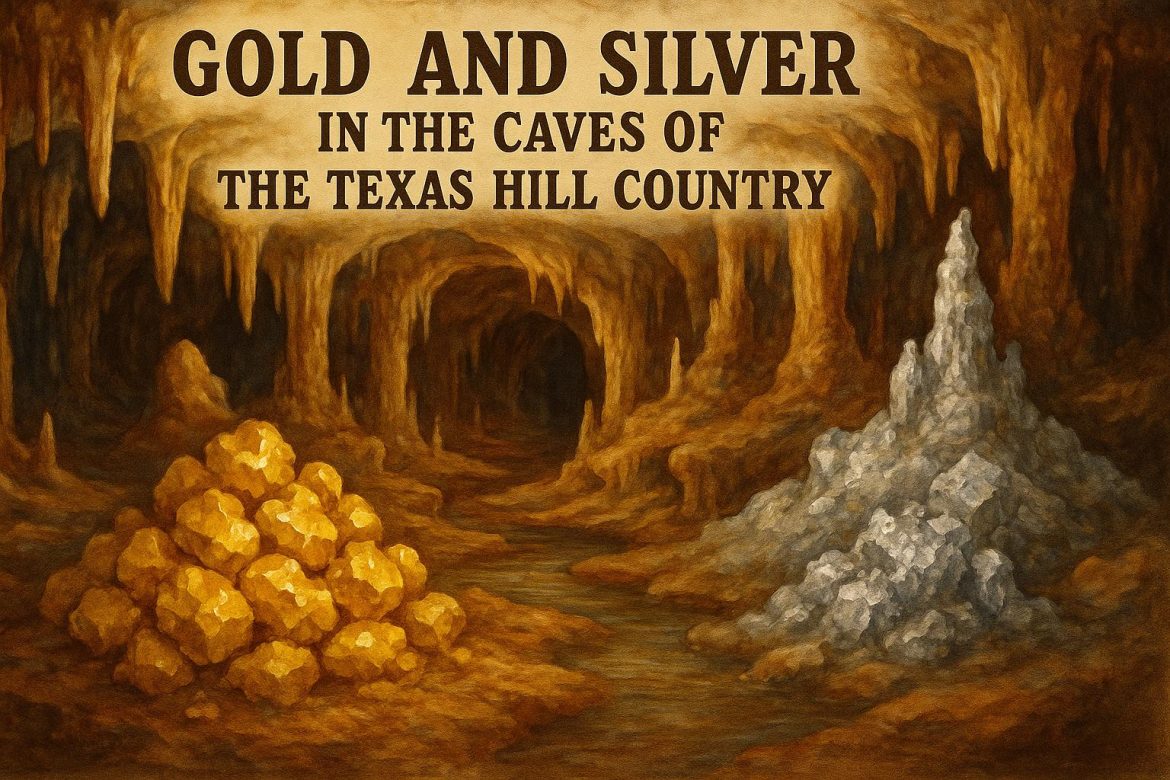
Texas, while not conventionally recognized as a premier source for precious metals like gold and silver, does have a history of small-scale mining activities. Historically, prospectors have conducted exploratory ventures throughout the state, including certain areas within the Hill Country. The notion of gold and silver deposits existing within these cave systems is a subject of interest, though these precious metals are not believed to be present in quantities substantial enough to justify widespread commercial mining endeavors. Nevertheless, the allure and mystery of potentially undiscovered deposits continue to intrigue geologists and prospectors alike, who believe that these caves might hold modest quantities of such minerals.
Historical Context of Mining
The history of mining in the Texas Hill Country is enriched by past pursuits dating back to the 19th century. During this time, the Texas Gold Rush sparked a wave of excitement and activity as prospectors scoured the lands in search of gold. The epicenter of this gold fever was the Llano Uplift area and other parts of Central Texas. Although these adventurous endeavors yielded limited successes, they played a crucial role in laying the groundwork for sustained interest in the region’s mineral potential. Despite the modest outcomes, these early efforts kindled a lasting curiosity that persists among geologists and prospectors who continue to survey the land based on the foundations laid by these early adventurers.
Today’s Exploration and Research
In contemporary times, geological surveys and advanced exploration techniques propel our understanding of mineral resources in the Texas Hill Country to new heights. While the primary focus has shifted considerably away from gold and silver mining, the potential of discovering these metals still exists on a smaller and more localized scale. Researchers remain captivated by the unique geological conditions that might contribute to the possible presence or future discovery of valuable mineral deposits within this region.
Ongoing studies are crucial for multiple reasons. They aid in assessing the economic feasibility of potential mining operations by providing data on the quality and quantity of available mineral resources. Moreover, these studies are vital for understanding and mitigating any potential environmental impacts that such mining activities might entail. Modern exploration efforts are aimed at balancing mineral extraction with the preservation of the Hill Country’s distinctive ecological and geological character, ensuring that any development takes into account the region’s natural beauty and environmental significance.
For anyone interested in delving deeper into the topics of geology and mining in Texas, reliable resources such as the Bureau of Economic Geology at the University of Texas offer extensive data and research findings. These resources provide a comprehensive view of geological studies conducted across the state, shedding light on both historical mining activities and current explorations that continue to shape our understanding of the Texas Hill Country’s vast geological landscape.