

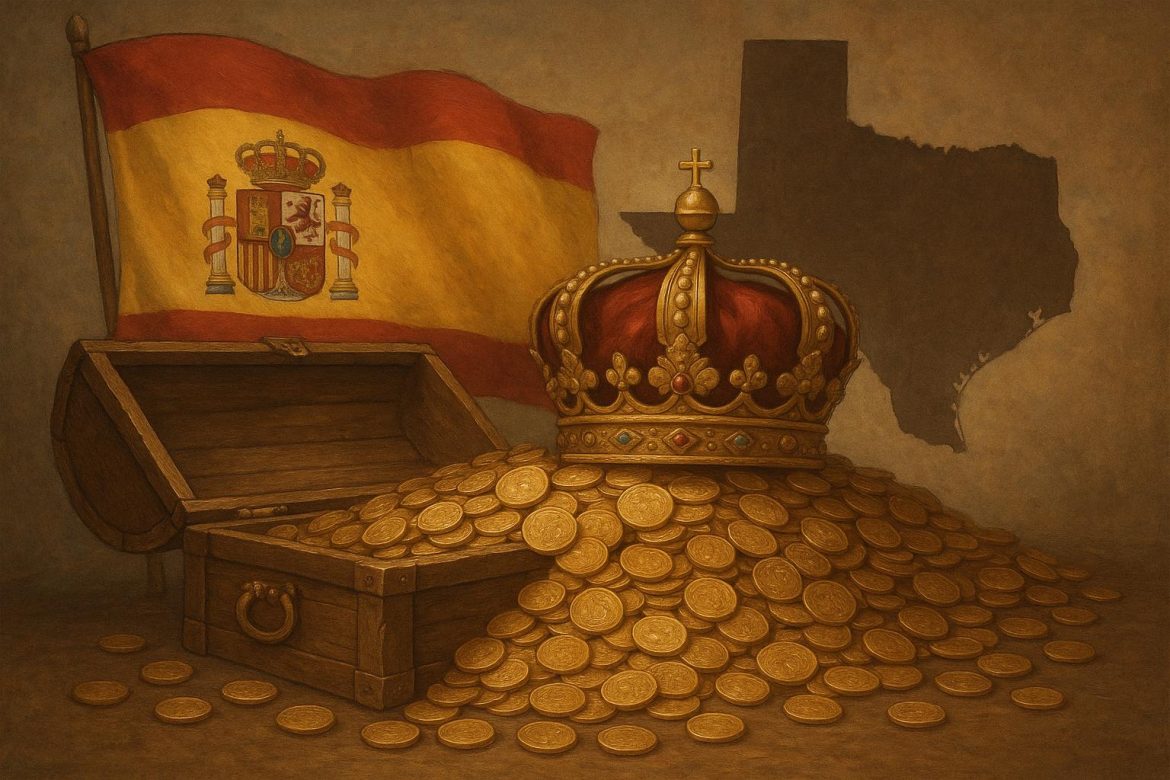
The Journey of the Spanish Crown’s Texas Gold Reserves
The history of the Spanish empire is intricately linked to its quest for precious metals, particularly gold. During the Spanish colonial period, gold was not just a symbol of wealth, but also a tool of power, integral to the empire’s economy and its expansion endeavors. As Spain spread its influence across the New World, it extended into present-day Texas. This region, with its promise of abundant resources, became a focal point for the Spanish explorers and administrators. The journey of the gold reserves associated with Texas remains a captivating chapter filled with historical significance and compelling stories.
Historical Context
The Spanish colonial expansion into Texas during the 18th century was motivated by several factors. Explorers and settlers ventured into this part of North America not just for territorial expansion but primarily in search of resources. Gold was one of the most highly sought-after resources. For the Spanish Crown, gold was more than just a metal; it represented economic strength and a means to fund various ventures, including military campaigns that were vital for maintaining control over its vast colonial territories. These expeditions significantly contributed to Spain’s status as a global power during this period.
Theoretical Transport and Storage
The logistics of transporting and storing gold reserves during the colonial period were complex and fraught with challenges. Historians and scholars often speculate about the methodologies employed by the Spanish to handle these valuable resources. It is believed that a significant portion of the gold extracted from Texas and other colonies was transported back to Spain. However, due to the dangers posed by piracy and theft, some of this treasure remained hidden within the colonies. To protect their assets, the Spanish employed various methods to conceal the gold, often involving secret locations that have since become subjects of legend and mystery.
The Decline of Spanish Control
The early 19th century was marked by a decline in Spanish colonial power. This era saw the empire losing its grip over many territories, including Texas. The Mexican War of Independence, which lasted from 1810 to 1821, further exacerbated Spain’s weakening rule, as it struggled to maintain control amid rising demands for self-governance in its colonies. The political and social upheaval of these times led to uncertainties regarding the management and security of the gold reserves. Many of these reserves were lost or transferred, making their fate uncertain and further contributing to the rich tapestry of myths and folklore surrounding them.
Legends and Mysteries
The narrative of the Spanish Crown’s gold reserves in Texas is replete with legends and folklore. Over time, stories have emerged claiming that vast amounts of treasures were buried in secluded locations throughout the region. These tales, passed down through generations, have become part of the local lore. While there are accounts of some treasures being unearthed, the majority remain hidden, keeping treasure hunters and historians alike intrigued. These legends fuel ongoing exploration and research, maintaining a sense of mystery around the fate of the Spanish gold.
Modern Investigations
In the present day, the quest to unravel the mystery of the Spanish Crown’s gold reserves continues to capture the interest of historians, archaeologists, and treasure hunters. Periodically, expeditions are launched with the hope of discovering evidence that can provide clarity to this historical enigma. The challenge, however, is formidable, primarily because of the limited documentation and records from that era. The efforts to decipher the actual fate of the gold are a testament to the enduring allure of this historical narrative. Even though much of it remains unresolved, each discovery contributes to a deeper understanding of the colonial past.
Conclusion
The tale of the Spanish Crown’s Texas gold reserves is a fascinating blend of history and folklore. Although some treasures have been found over time, offering insights into the colonial era, the complete story behind these reserves continues to be elusive. This narrative serves as a reminder of the complex dynamics between European empires and their colonies. The measures taken by these empires to secure wealth for sustaining their global dominance reflect a period of intense competition and ambition.
Overall, the enigmatic journey of these gold reserves provides a unique perspective on the history of colonial exploitation and the enduring impact of these actions on the regions involved. As historians and archaeologists persevere in their quests, the story of the Spanish gold in Texas remains a captivating tale that invites further exploration and discovery.