

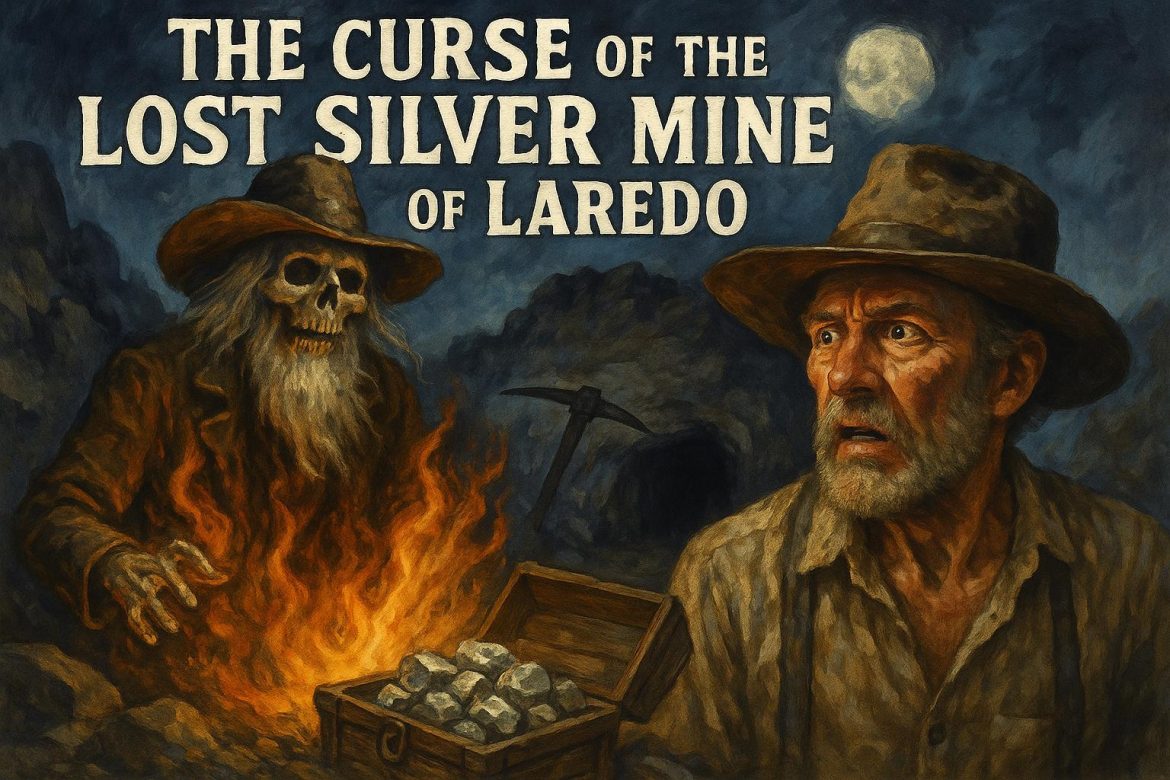
Introduction to the Legend
In the border town of Laredo, Texas, tales of a mysterious lost silver mine have captured the imagination of locals and historians alike. Known as the “Curse of the Lost Silver Mine of Laredo,” these stories are steeped in folklore, speaking of riches lost and never recovered. Despite the lack of concrete evidence, the legend persists as a fascinating piece of local history.
Historical Background
Laredo was founded in 1755 by Don Tomás Sánchez, and it has always been a pivotal location, primarily owing to its position along the Rio Grande. The area is rich in history, with many stories stemming from its colonial past. According to local lore, a vein of silver was discovered nearby during the Spanish colonial period. This mine is said to have yielded considerable wealth before vanishing without a trace.
The town’s founding by Sánchez marked a significant moment, serving as a gateway between northern Mexico and the southern United States. Its position made Laredo a hub of commerce and cultural exchange, a convergence of peoples and traditions. As a border town, it blended Hispanic and Anglo cultures, becoming emblematic of the complexities of the Texas frontier.
During these formative years, tales of wealth, adventure, and exploration began to take root. The Spaniards, ever in search of riches, were driven by legends of gold and silver scattered through the New World. It is in this context that the story of the lost silver mine finds its origins. These stories were often passed down through generations, encompassing details both factual and mythical, evolving as they moved through time.
The Legend
The legend is fueled by tales of a solitary miner who stumbled upon a plentiful vein of silver in the rugged terrain near Laredo. Documented accounts from the era are scant, but oral traditions speak vividly of this miner’s fortune. Various narrations propose that the Spanish monarchs, in discovering this rich deposit, elected to keep it secret. Their intent was clear: to prevent exploitation by rivals or theft by bandits, a common threat during those tumultuous times.
As with many legends, details surrounding the mine are deliberately vague. Some accounts speak of a cavernous opening obscured by dense vegetation, while others suggest it lies beneath what is now impenetrable farmland. The lack of concrete information has only served to fuel its allure, transforming the tale into an enduring enigma. Over time, as those privy to its location passed away, the mine’s whereabouts slipped into obscurity, leaving only whispers and speculation behind.
The Curse
An integral aspect of the legend is the so-called curse associated with the mine. This narrative adds a mystical dimension to the story, suggesting that those who seek the mine are doomed to misfortune. This curse acts as a cautionary tale, employed to ward off treasure hunters from the dangers of greed and hubris. Supposedly, numerous individuals who have embarked on quests to uncover the lost mine have encountered untimely deaths or suffered from unexplainable bad luck.
The curse becomes not just a part of the story, but a commentary on human nature. Greed, ambition, and the relentless pursuit of wealth are concepts intrinsically tied to the tale, serving as reminders of the repercussions of excess. The curse, whether real or imagined, adds a layer of depth and intrigue, prompting listeners to ponder the wisdom of seeking fortune at such a perilous cost.
Modern Interpretations
Today, the legend continues to intrigue treasure hunters and folklorists. While no substantial evidence has ever been found to prove the mine’s existence, it remains a popular subject of speculation and adventure. Some believe the mine may lie in an undiscovered cave or beneath layers of sediment deposited over centuries.
Despite the technological advances and extensive explorations of modern times, the elusive mine continues to evade discovery. The mystery surrounding its existence has inspired a variety of speculative endeavors, including amateur expeditions and scholarly research. Treasure hunters equipped with advanced tools have scoured the land, yet the mine remains as elusive as ever.
Beyond the thrill of the hunt, the legend represents a deep-seated curiosity about forgotten histories and mysteries of the past. It captivates the imagination, inviting an exploration not just of land, but of Laredo’s cultural and historical identity. Folklorists study the story as a narrative reflecting collective local beliefs and values, examining it as a living part of regional identity.
For those interested in exploring more about the culture and history of Laredo, a visit to the Laredo Visitor Information Center provides valuable insights and resources. Here, one can delve into more of Laredo’s rich narrative, understanding how such legends weave into the broader mosaic of Texas folklore.
In conclusion, the tale of the Lost Silver Mine of Laredo exemplifies the rich tapestry of local legend and history, blending tales of adventure, mystery, and caution that continue to echo through the ages. The legend stands as a testament to the human thirst for stories of wonder and marvel, appealing to our instincts to uncover hidden truths and explore the unknown. While the tangible evidence of the mine may remain elusive, its intangible impact as part of Laredo’s cultural fabric is unmistakable, proving that some of the most enduring treasures lie not in riches but in the stories we tell across generations.