

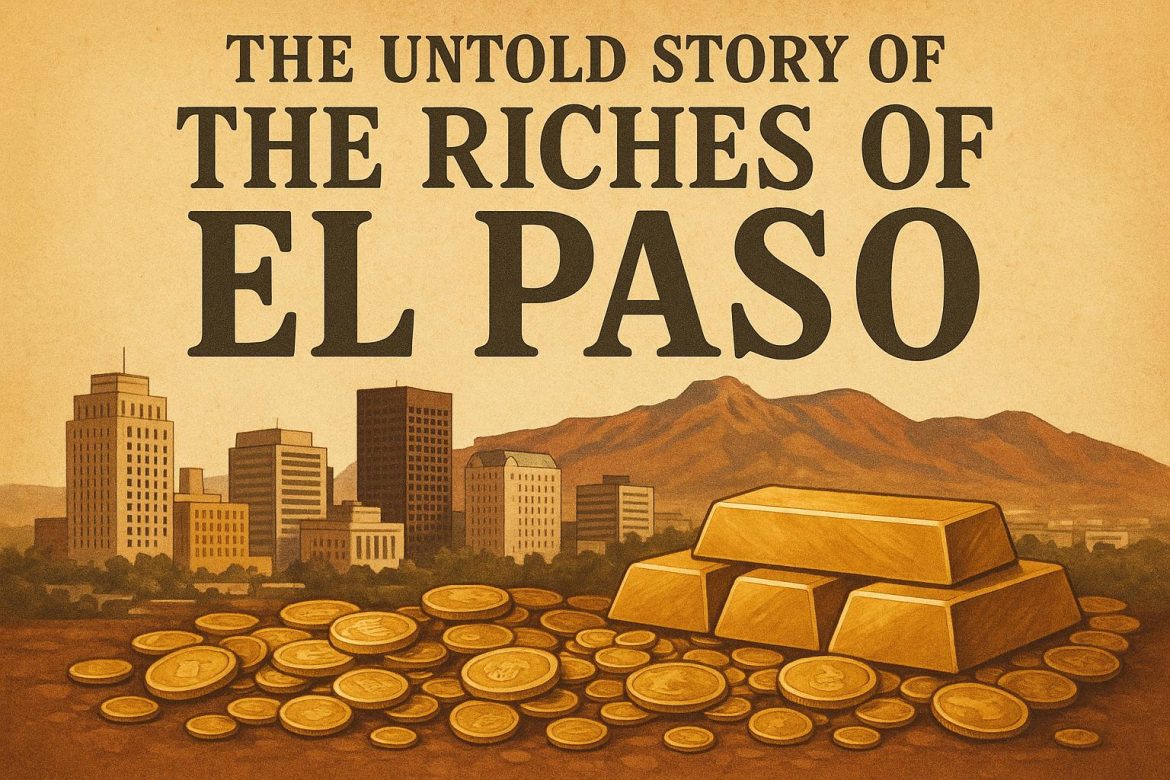
The Historical Overview of El Paso’s Rich Resources
El Paso, Texas, commonly known as “The Sun City,” is celebrated for its lively culture and close proximity to Mexico. However, beyond its cultural attractions, El Paso boasts a rich history shaped by diverse natural resources and a legacy of economic activity. This article offers an in-depth exploration of El Paso’s intrinsic wealth, focusing on its substantial contributions to the domains of mining, agriculture, and trade.
Mining: The Backbone of El Paso’s Economy
During the late 19th and early 20th centuries, El Paso emerged as a pivotal center for mining activities. The area surrounding El Paso was rich with deposits of copper, silver, and lead, which were integral to the city’s early economic development. The discovery of these minerals catalyzed a period of rapid industrial expansion. Notably, the American Smelting and Refining Company (ASARCO) established one of its largest facilities in El Paso, profoundly influencing the economic framework of the region. This setup not only provided employment but also attracted ancillary industries and businesses, contributing to further growth.
Over the years, technological evolution and a shift towards environmental responsibility have reshaped the mining landscape in El Paso. Although active mining operations have diminished, the foundation laid by this industry has left a lasting impact on the city’s economic identity. The transition has seen a focus on sustainable practices that align with contemporary environmental standards. Today, while mining is not as predominant as it once was, it remains a pivotal chapter in El Paso’s economic narrative, showcasing both its historical significance and adaptability.
Agriculture: Cultivating Prosperity
Parallel to mining, agriculture has sustained as a crucial pillar of El Paso’s economy. The fertile lands nourished by the Rio Grande have supported a variety of crops, establishing the region as an agricultural hotbed. Specifically, crops such as cotton, pecans, and chiles have thrived in this environment, forming an essential part of the local economy. The geographic positioning of El Paso has proven advantageous, as it facilitates the efficient distribution of these agricultural products across Texas and extends into the Mexican market.
This aspect of agriculture underscored El Paso’s role in fostering regional economic prosperity, as the products cultivated here not only served local needs but also gained traction in broader markets. Agricultural advancements, improved irrigation techniques, and innovation in farming practices have continually enhanced production efficiencies and product quality. Consequently, these developments have perpetuated the legacy of agriculture as an enduring economic engine for El Paso.
Contemporary Trade and Economic Significance
El Paso’s strategic location along the U.S.-Mexico border designates it as a vital conduit for international trade. The implementation of the North American Free Trade Agreement (NAFTA) marked a significant enhancement in trade activities, amplifying El Paso’s role in cross-border commerce. This geographic advantage has positioned the city as a primary gateway for goods transiting into and out of the United States.
Presently, El Paso is recognized for its emphasis on manufacturing, logistics, and warehousing—sectors that benefit from robust infrastructural connectivity and trade agreements like the United States-Mexico-Canada Agreement (USMCA). The city’s borders witness the orchestration of complex logistics operations that handle significant volumes of goods, underlining its significance in facilitating international trade. Besides, the symbiotic commerce between the U.S. and Mexico further underscores El Paso’s economic relevance on the global stage.
Modern Economic Diversification
Recent years have seen deliberate efforts to diversify El Paso’s economy beyond its historical mainstays of mining and agriculture. Acknowledging the need for a multifaceted economic framework, El Paso has embraced sectors such as technology, healthcare, and education. This strategic diversification aims to insulate the city from sector-specific downturns and foster sustainable growth.
Investment in educational institutions such as the University of Texas at El Paso has been pivotal in this transition. The university contributes significantly to research and innovation, attracting talent and encouraging entrepreneurial ventures. Moreover, developments in the healthcare sector, with expanding medical facilities and research institutions, bolster the local economy by offering employment opportunities and enhancing the quality of services available.
The influx of technology-oriented companies seeking to capitalize on the city’s geographical and infrastructural benefits further augments these diversification efforts. By capitalizing on these sectors, El Paso aims to cultivate a thriving ecosystem that supports innovation, research, and high-value industries.
Understanding El Paso’s history of resource-based wealth presents a nuanced appreciation of its economic evolution. The city’s rich past in mining and agriculture lays a foundation that supports its current prominence in international trade. Coupled with modern strategies focused on economic diversification, El Paso is well-positioned to seize future opportunities, showcasing a dynamic metropolis that honors its legacy while embracing innovative growth. As such, the story of El Paso’s riches is both a reflection of its historical journey and an illustration of its capacity for reinvention and progress.