

The Historical Context of the Gold Rush Era
In the mid-19th century, a remarkable phenomenon known as the gold rush swept across the United States, drawing individuals and their dreams to newfound horizons. This period, most famously embodied by the California Gold Rush of 1849, left a lasting imprint on the nation’s history. The gold rushes of this era were not isolated events; rather, they were a series of occurrences characterized by a sudden and intense influx of prospectors. These individuals were driven by the hope of making their fortunes through the discovery of gold. As a result, regions where significant gold strikes were made experienced unprecedented economic and population booms. This period was transformative and marked the U.S.’s expansion into the western areas. While California often takes center stage in this historical narrative due to its massive gold discoveries, other states like Nevada and Colorado also played substantial roles in developing gold mining strategies and technologies. Surprisingly, Texas, despite being less commonly associated with this golden age of prospecting, also found itself swept up in the allure of the era.
Gold Prospecting in Texas
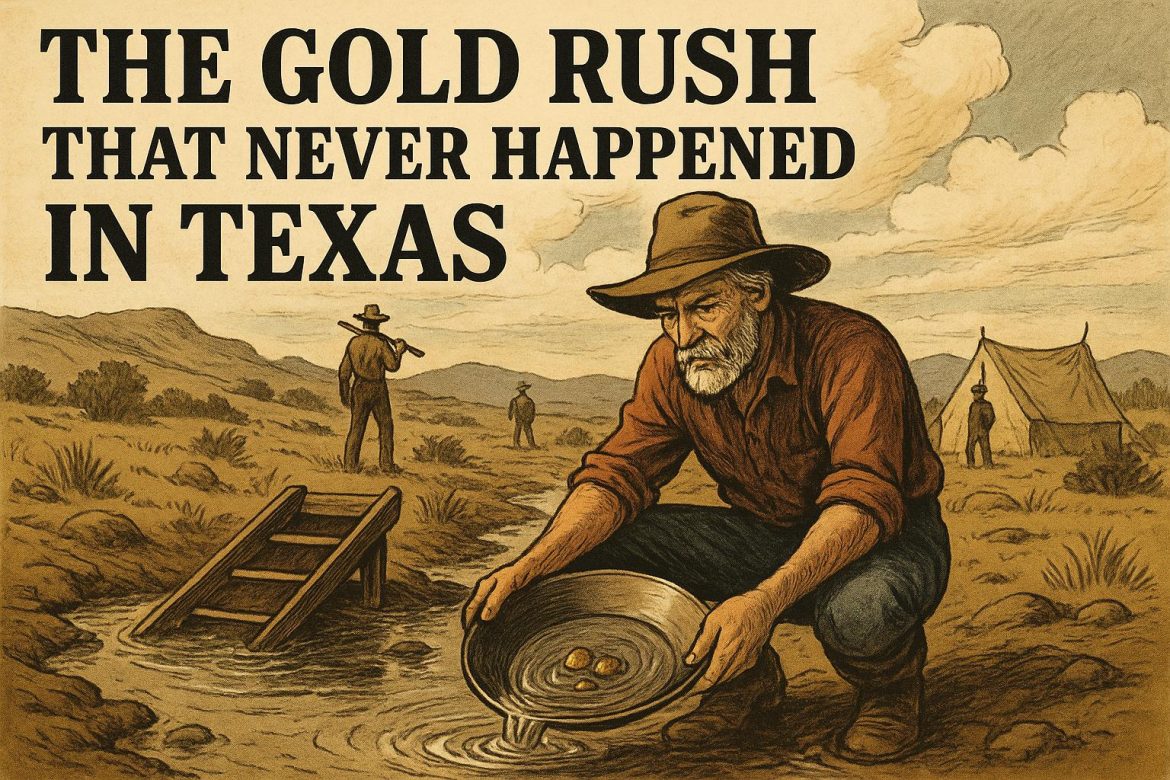
Texas, a land of vast horizons and diverse landscapes, was not without its share of gold-seeking enthusiasts during the 19th century. Despite not being a central location for gold rush events, the state attracted prospectors eager to explore any possibility of uncovering hidden wealth. The geological characteristics of Texas, however, presented a unique set of challenges that set it apart from other gold-rich regions. Whereas states like California boasted large deposits embedded within igneous and metamorphic rocks, Texas primarily comprises sedimentary rock formations. These geological differences meant that, generally, Texas lacked the conditions that typically favor significant gold deposits. However, the scarcity of gold-bearing rock did little to extinguish the stories and rumors of gold lurking just beneath the surface of Texas soil. These tales persisted throughout the years, encouraging the adventurous and the hopeful to embark on their quests across the Lone Star State, searching for elusive riches.
The Myths of Texas Gold
Among the many legends surrounding gold in Texas, none are as enigmatic or captivating as the tale of the “Lost Nigger Gold Mine.” This story speaks of a secretive gold mine believed to be hidden in the Llano Uplift region of Texas. The mine, purportedly concealed from the eyes of the world, has become the stuff of legend, intriguing treasure hunters and historians alike. Yet, despite generations of speculation and storytelling, there is no verifiable evidence to confirm the existence of such a mine. The absence of tangible proof has not deterred the spread of other similarly captivating stories. These narratives weave a tapestry of adventure, hope, and mystery, all centered on the quest for Texas gold. However, despite their allure, these tales have yet to result in the discovery of any substantial or commercially viable gold deposits in Texas.
Why a Gold Rush Never Materialized
Several pivotal factors combined to prevent a significant gold rush from materializing in Texas. A key reason lies in the state’s lack of considerable gold deposits; detailed geological surveys have consistently failed to uncover commercially viable reserves of the precious metal. This absence curtailed any large-scale mining enterprises from taking root. During the same period, Texas was deeply engaged in more profitable economic activities that overshadowed any potential mining ventures. Ranching and cotton production formed the backbone of the state’s economy in the 19th century, drawing resources and investment away from less reliable industries like gold prospecting. Additionally, the infrastructure in Texas at that time did not favor the development of a mining industry. Unlike states further west, Texas possessed limited access to railroads and lacked the supply lines crucial for supporting a burgeoning mining economy. This lack of facilities made regions with existing mining boom towns and more promising geological prospects far more attractive to aspiring miners.
The Impact on Texas Today
In contemporary times, while the shadow of a Texan gold rush remains a historical footnote, the state’s economic foundation has evolved and flourished in other directions. Texas today is renowned for its abundant mineral resources, which continue to play a pivotal role in shaping its economy. The state stands as a leading producer of oil and natural gas, industries that provide a substantial portion of its revenue and employment. Beyond hydrocarbons, Texas is rich in various industrial minerals, further reinforcing its economic position and offering a broader development platform. Although the gold dreams of the past never truly took hold within Texas, the state found wealth in the very ground where gold seekers saw little gleam. Its robust geologic resources have propelled Texas into a phase of economic prosperity and a pivotal role in the broader U.S. resource extraction industry.
For those interested in delving deeper into the geology and mineral wealth of Texas, insightful resources are available via state agencies dedicated to understanding and managing these assets. The Texas Water Development Board and the Texas Railroad Commission offer valuable perspectives and analyses regarding Texas’s rich geological history and the economic significance of its mineral resources.