

Introduction
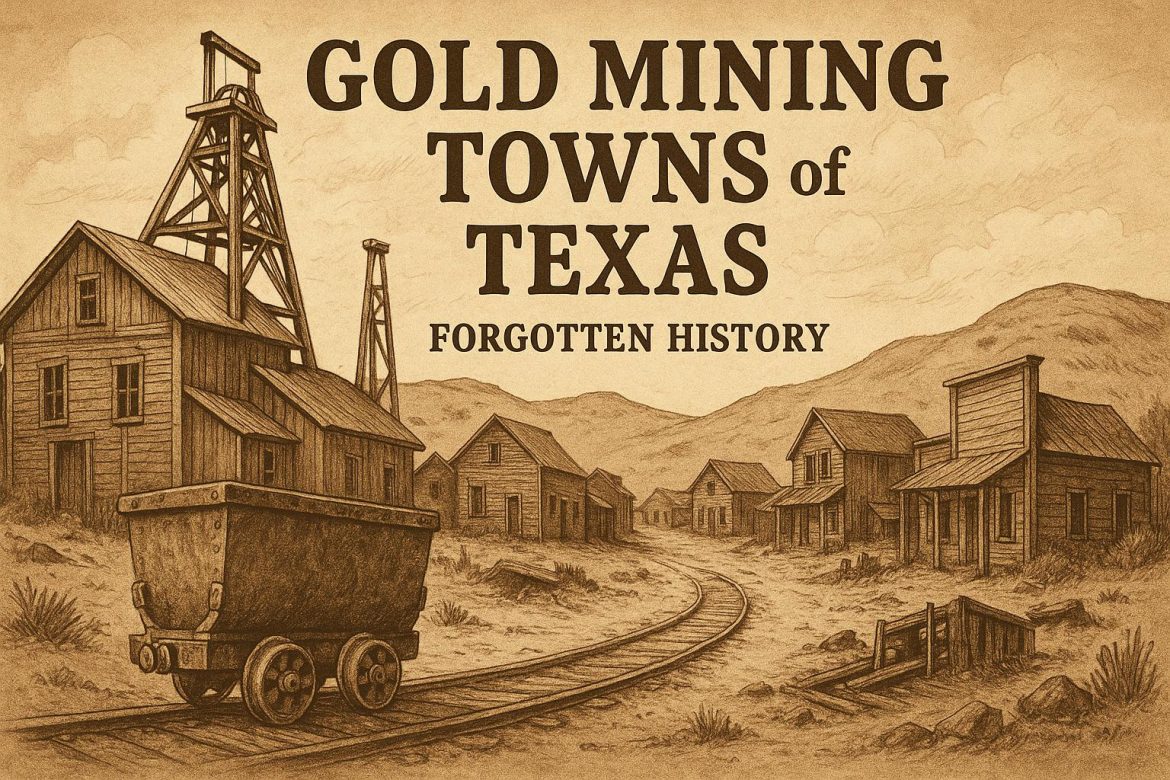
In the expansive era of the 19th century, Texas found itself briefly swept up in the fervent allure of gold fever, an ardent chapter during an age characterized by westward expansion and settlement. Although Texas’s gold rush never gained the widespread fame of its counterparts in California or Alaska, it did succeed in drawing numerous intrepid adventurers to the Lone Star State. This influx of miners and settlers resulted in the emergence of several gold mining towns, some of which have since faded into obscurity, their legacies merely whispers within the vast Texan landscape.
The Emergence of Texas Gold Mining Towns
The evolution of gold mining towns in Texas was closely tied to the mid-1800s when the quest for gold was at its peak. The prospectors of the time, driven by hopes of striking it rich, found themselves gravitating towards areas characterized by promising geology. Although Texas never yielded gold in volumes that could rival other states, the discovery of a number of valuable sites was sufficient to spur the establishment of mining towns. These nascent communities were usually small, comprising miners, entrepreneurs, and the families that supported their efforts.
Gold Discovery Sites
Central Texas, with its Llano Uplift region, became one of the focal points for gold discovery. This area was not only abundant in gold but was rich in a myriad of other minerals, thus presenting a geologically favorable environment for gold deposits to form. The allure of potential wealth drew prospectors from far and wide, and the Llano County and its neighboring regions quickly gained renown for their mining potential. Aspiring miners would set up operations, fueled by the promise of uncovering significant deposits and achieving prosperity.
Challenges Faced by Early Miners
Despite the optimism that marked these early mining ventures, prospectors in Texas faced a multitude of formidable challenges. The state’s geological profile, while promising in certain respects, failed to consistently yield gold in economically viable quantities. This paucity, in comparison to other states, posed a significant hurdle. Moreover, the miners had to contend with the era’s rudimentary mining technology and infrastructures, which lacked the sophistication required for efficient extraction and processing of gold. This reality made mining endeavors labor-intensive and financially burdensome, often resulting in more struggle than success.
The Decline and Legacy of Mining Towns
As the 19th century drew to a close, the allure of gold mining in Texas had significantly waned. The diminishing returns from mining operations coupled with the arduousness of extraction caused many of these towns to decline. With the promise of gold fading, miners and settlers began leaving Texas in pursuit of more lucrative opportunities elsewhere. The erstwhile bustling towns, once teeming with life and ambition, slowly disappeared from the landscape. Nevertheless, some of these regions successfully transitioned by shifting their economic focus from gold mining to the extraction of other natural resources, notably granite and various minerals.
Even though most of the gold mining towns vanished into obscurity, their contributions to the historical narrative of Texas’s resource extraction endeavors are indelible. The remnants of these towns are sporadically visible today, with old foundations, abandoned mining equipment, and historical markers standing as silent storytellers of the past. They offer insights into the lives of those whose dreams fueled their journeys into the challenging and remote terrains of Texas.
Preservation Efforts
In contemporary times, there has been a growing movement towards preserving the history and legacy of Texas’s gold mining towns. Local historians, cultural enthusiasts, and communities have taken it upon themselves to maintain records, restore historical sites, and curate stories, ensuring that this unique chapter of Texan history remains accessible for future generations. Through these dedicated preservation efforts, the rich tapestry of the miners’ lives, their aspirations, and the rugged terrains they adopted as home continues to offer invaluable perspectives on a formative period in the Lone Star State’s history.
Conclusion
While Texas’s gold mining towns may not command the same attention or renown as the more illustrious gold rush locations, their tales are an integral aspect of the state’s historical fabric. They encapsulate the indomitable spirit of adventure that was emblematic of the westward expansion—a zeal for opportunity that persisted even amidst daunting challenges. The resurgence in interest and efforts dedicated to preserving the history of these towns ensures that they remain relevant in the collective memory. Through these efforts, they continue to captivate historians and enthusiasts alike with narratives of once vibrant communities and the paths to fortune they sought to carve in the challenging Texan frontier.