

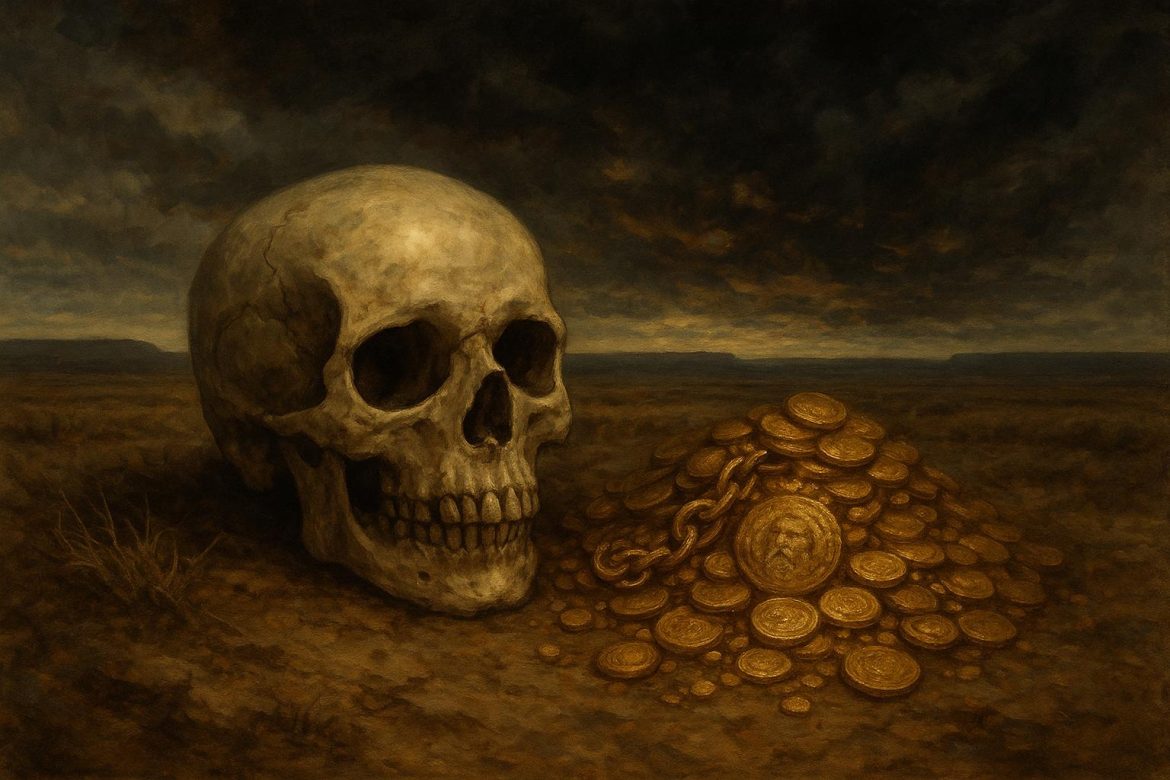
The Legend of the Cursed Treasure
The landscapes of the Llano Estacado, spanning Texas and New Mexico, form the canvas for myriad tales of lost riches and ominous curses, which have captivated historians and treasure seekers for generations. Despite the allure surrounding these narratives, distinguishing authentic history from folklore often proves a complex endeavor.
The Historical Context
The tales of hidden treasures in the Llano Estacado frequently trace their roots back to the Spanish expeditions of the 16th and 17th centuries. Spaniards embarked on ambitious quests for wealth, often entailing the subjugation of native populations and extensive resource extraction. These ventures occasionally culminated in enigmas involving hidden treasures, reportedly concealed to safeguard them from pillagers and hostile forces. Historical narratives from this era describe a world where courage blended with greed, and exploration became a dance between ambition and morality.
The Spanish Influence: Much of the region’s allure stems from Spain’s extensive presence in the Americas, driven by tales of a new world abundant in gold and silver. Spanish expeditions, often sanctioned by the crown, sent explorers across the continent. As these conquistadors charted unknown territories, stories spread of treasures hidden either deliberately to avoid theft or unintentionally due to the adventurers’ untimely demise. This historical backdrop provides fertile ground for legends of treasure, sowing seeds that have blossomed into tales of the cursed riches that exist in the popular consciousness today.
The Curse
Although the notion of a curse adds a veil of intrigue to the story, historical documentation corroborating the existence of a genuine curse is scant. This attributed curse appears to serve more as a deterrent than a documented truth, conceivably intended to discourage the incessant pursuit of treasure. Supposedly, those brave—or foolhardy—enough to hunt for this treasure inevitably encounter adversity, whether from the harsh elements or fear of the unknown.
In essence, the curse narrative could be seen as a socio-cultural artifact rather than a supernatural truth. It may have emerged as a protective story, woven by communities vexed by treasure hunters’ incursions. Alternatively, it might represent a cautionary tale, a testament to humanity’s perpetual quests and the dangers of unchecked avarice.
Searching for the Treasure
The quest for treasure on the Llano Estacado is fraught with natural challenges. The area’s topography, marked by its extensive, flat plains, offers little in the way of navigational reference points. Its climate, notorious for extreme heat and scarcity of water, demands not only resilience and resourcefulness but also tenacity from those daring to search the region.
A variety of tactics have been employed over the centuries. Since the dawn of metal-detecting technology, treasure hunters employ sophisticated equipment to aid their quest. Historical maps, often cross-referenced with local folklore, guide these searchers in their endeavors, each interpreting traces of evidence with optimistic scrutiny. Yet, despite countless initiatives and the expertise of modern technology, no irrefutable evidence confirming the existence of the treasure has emerged, leaving the story enshrouded in mystery.
Scientific and Archeological Findings
Although treasure hunters remain ever-hopeful, less interest from the scientific and archaeological communities is evident in the so-called cursed treasure. Instead, archaeological efforts in the Llano Estacado focus on extracting historical and cultural insights from other remnants of past civilizations. These endeavors have unearthed artifacts that illuminate the lives of indigenous tribes and early settlers, offering partial narratives etched into the very sediment of the region.
Critical analyses and discoveries highlight the necessity of grounding myths within historical reality. Archaeologists advocate studying the legends by prioritizing evidence and broader cultural contexts over sensational tales. In dissecting these narratives, researchers often expose how tales have been embroidered over decades, transforming historic events into fantastical folklore.
For more scholarly resources and details on historical enterprises in Texas, the Portal to Texas History offers a valuable repository of information.
Conclusion
The enigmatic tales of the cursed treasure on the Llano Estacado continue to enchant and titillate storytellers and explorers alike. Though these stories abound with intrigue, they primarily thrive within the sphere of folklore without substantial verification from historical documentation. While a faint possibility of undiscovered riches may linger in the shadows of the plains, explorers must remain mindful of the tangible challenges posed by the region’s austere landscape and exhibit respect toward its historical narratives.
Ultimately, while the spectral allure of treasure may persist, the true wealth lies in unearthing and honoring the region’s rich historical tapestry. With every story told and every artifact recovered, the Legend of the Llano Estacado’s cursed treasure serves as a reminder of the endless quest for knowledge and the eternal fascination with what lies beneath the surface.