
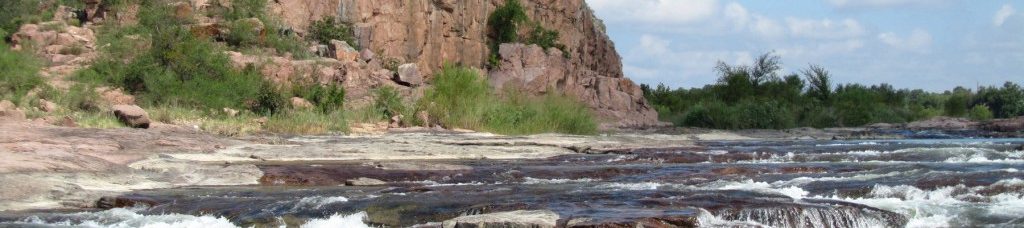
The Lost Conquistador Treasure of the Franklin Mountains
According to legend, Spanish conquistadors have hidden a large treasure in the Franklin Mountains in El Paso County.
The story is one of several lost treasure legends associated with the mountains around El Paso, Texas. For generations, treasure hunters have searched the rugged slopes and canyons for mines supposedly filled with Spanish silver, gold, jewels and religious valuables. There is no verified archaeological discovery proving that the enormous treasure described in the stories exists, but the legend has survived because it mixes real Spanish colonial history with a landscape full of old mining activity, difficult terrain and routes once used by people travelling north from Mexico into what is now New Mexico.

During the era of the conquistadors, the Spaniards would frequently pass through the Franklin Mountains on their way to colonize the Native American lands of New Mexico. According to legend, a group of Spanish priests used a deep mine in these mountains to hide valuables in the 1580s, before filling the shaft to protect the secret. If legend is to be believed, this lost mine holds 300 burro loads of silver.
This version of the story is commonly associated with what became known as the Lost Padre Mine. As with many Southwestern treasure stories, there are several versions and they do not agree on every detail. Some describe priests concealing silver before abandoning the area, while others speak of thousands of silver bars or a much larger collection of Spanish treasure. The Handbook of Texas account of the Franklin Mountains records both the story of roughly 300 burro loads of silver and another version involving Juan de Oñate, thousands of precious metal ingots, jewels and Aztec manuscripts. The fact that the story appears in regional historical writing establishes it as a long standing legend, however it does not establish that the treasure itself has been found or that the quantities in the story are historically accurate.
The geography certainly helps the story. The Franklin Mountains rise directly through the El Paso area and contain steep slopes, narrow canyons and large areas of desert rock where an old mine entrance could be difficult to identify after centuries of erosion and human activity. Modern roads make El Paso accessible, but early travellers entering the region faced a dry and demanding environment where reliable water was essential. The mountains formed part of the broader Paso del Norte region, a natural passage associated with movement along the Rio Grande and later with the Spanish route that became known as the Camino Real de Tierra Adentro.
Mining also gives the legend a little more plausibility at first glance. The Franklin Mountains have a genuine mining history, although much of the documented activity belongs to later periods. Tin was mined commercially in the mountains during the early twentieth century, for example, although the operation proved disappointing and was eventually abandoned. Old workings, prospecting activity and naturally occurring mineralisation make it much easier for stories about hidden Spanish mines to survive because a hole in the rock can quickly acquire a much more interesting history once several generations have retold the story.
The Lost Padre Mine
The Lost Padre Mine is one of the names most closely connected with treasure hunting in the Franklin Mountains. The basic version claims that Spanish priests knew of a rich mine and removed large amounts of silver before concealing the workings. In some versions, the mine was deliberately filled so nobody could recover what remained. Later searchers supposedly found signs, old workings or clues but failed to relocate the entrance, which is a familiar pattern in lost mine stories throughout Texas, New Mexico, Arizona and northern Mexico.
The quantity of silver varies depending on who tells the story. Three hundred burro loads is already a tremendous amount of metal. Other versions increase the treasure substantially by adding thousands of silver bars and large amounts of gold. This gradual inflation is one reason lost treasure stories should be approached as folklore rather than financial inventories. A story repeated for centuries tends to acquire better treasure, more mysterious clues and a slightly more unfortunate sequence of previous treasure hunters each time it is told.
No authenticated inventory has surfaced showing that priests placed 300 burro loads of silver in a Franklin Mountains mine during the 1580s. Nor has a verified mine containing such a deposit been documented. The absence of proof does not make the story uninteresting. In fact, much of the fascination comes from trying to determine where documented history ends and oral tradition begins.
The date attached to the priest version deserves attention as well. Spanish expeditions were travelling through the broader region during the late sixteenth century, but the permanent colonisation associated with Juan de Oñate came later. An expedition led by Antonio de Espejo travelled through parts of New Mexico in the early 1580s, while other Spanish expeditions followed before Oñate’s major colonising expedition finally moved north in 1598. It is therefore possible for a treasure story to contain broadly appropriate sixteenth century Spanish imagery while still combining people, dates and events from several different periods.
The Juan de Oñate Treasure Legend
Another legend about the Franklin Mountains tells us that in 1595, Juan de Oñate hid nine burro loads of jewels, 4,336 gold ingots, five silver bars and four Aztec codices (manuscripts) in an abandoned mine. The legend also claims that Guadalupe Mission in El Paso is built in a way that provides clues to the location of the treasure. At the right day of the year, at noon, the shadows of the mission is supposed to point to the lost mine. This treasure could be worth more than 2 billion dollar if it was ever found. The value is calculated using standard ingot weight and the gold price provided by DayTrading.com (1,292.28 oz / 41,548 Kg at the time I am writing this.) .
The figures attached to this version are remarkably precise for a treasure whose existence has never been demonstrated. The number 4,336 gold ingots gives the story the appearance of an inventory rather than folklore, yet no reliably documented colonial record confirming such a Franklin Mountains deposit is known. The Handbook of Texas records a closely related version of the legend, including 4,336 gold ingots, nine burro loads of jewels and four Aztec codices, showing how firmly these details have become attached to local treasure lore.
The monetary estimate should also be treated as illustrative rather than as a current valuation. The gold price shown in the original calculation reflects the market price at the time that calculation was made, not the price of gold today. More fundamentally, assigning a bullion value to 4,336 hypothetical ingots requires assumptions about the size, weight and purity of each ingot. The alleged codices and historic jewels would be even harder to value because an authenticated sixteenth century manuscript can have cultural and historical importance that bears little relationship to the value of the material from which it was made.
If such a cache were ever genuinely discovered, determining a headline dollar value would probably be one of the easier parts of the situation. Archaeological context, ownership, land status, historic preservation law and the cultural importance of any manuscripts or colonial artefacts would all need consideration. A centuries old object is not simply bullion waiting for somebody to put it on a scale.
Did Oñate Really Hide the Treasure in 1595?
The date presents one of the clearest reasons to separate the legend from documented history. Oñate received authority to establish a permanent colony in New Mexico during the 1590s, but his large expedition did not actually make its famous northward journey through the region until 1598. National Park Service historical material records that he travelled north with soldiers, families, servants, wagons and livestock and reached the Rio Grande crossing at El Paso del Norte in the spring of that year. On April 30, 1598, Oñate formally claimed the territory drained by the Rio Grande for Spain before continuing north into New Mexico.
That does not prevent a later story from attaching treasure to Oñate, but it creates a problem for the literal claim that he personally buried the famous Franklin Mountains cache during the 1595 expedition. The better way to read the tale is as a piece of regional folklore that uses a real historical figure whose expedition became closely associated with Spanish colonisation of the upper Rio Grande. Over time, famous names tend to attract existing treasure legends because they give the story a recognisable character and a rough historical setting.
The same process occurs in treasure stories elsewhere. Wealth belonging to an unnamed traveller becomes the treasure of a famous conquistador, outlaw or military commander. An old mine becomes a secret Spanish mine. An unusual feature of a church becomes a coded directional marker. The resulting story may contain several genuine historical ingredients without the final treasure narrative itself being documented.
Who was Juan de Oñate?
Juan de Oñate was the son of a wealthy Spanish silver mine developer. In 1595, King Phillip II of Spain appointed Juan de Oñate as governor, captain general, caudillo, discoverer and pacifier of New Mexico – a territory yet not conquered by the Spaniards. The king sent Oñate out on an expedition with two goals: find riches for Spain and convert the natives to Christianity. Oñate was given orders to attract the natives to Catholicism using friendly means.
The formal history is slightly more complicated than the abbreviated version above. Oñate negotiated a contract to colonise New Mexico within the Spanish imperial administration, and the viceroy in Mexico City granted him authority to establish the colony. His family background made him an obvious candidate for such an expensive undertaking. His father, Cristóbal de Oñate, had been connected with the extraordinarily productive silver mines at Zacatecas, and Juan himself had experience in mining, military activity and colonial administration.
Like many other wealthy Spanish families, the Oñate family financed the expedition themselves, hoping it would yield them riches and prestigious titles. When Juan de Oñate set out, he was the commander of 400 soldiers, 130 families, 1,000 head of cattle, 1,000 head of sheep and 150 mares. Together, they embarked on a trek across the barren Chihuahuan desert.
Historical estimates of the expedition’s exact size vary depending on which people and livestock are counted, and modern National Park Service summaries give a smaller figure of about 129 soldiers accompanied by families, servants, wagons and a large herd of livestock. What is beyond doubt is the scale and difficulty of the enterprise. This was not a small party of adventurers slipping through the desert with a few horses. Oñate was trying to establish a permanent Spanish colony, which meant transporting people, animals, equipment and supplies through an environment where access to water could decide whether the expedition continued at all.
The expedition reached the Rio Grande in 1598 and continued north into present day New Mexico, establishing an early colonial settlement at San Juan de los Caballeros and later San Gabriel. Oñate also led or ordered further expeditions in search of wealth, routes and information about the enormous territory Spain was attempting to control. The hope of mineral riches was certainly part of Spanish colonial expansion, which is another reason treasure legends can be attached to his name without sounding completely implausible at first.
Oñate’s historical reputation is also highly controversial. Spanish colonisation involved coercion, violence and the attempted subordination of Pueblo communities rather than simply exploration of empty territory. The conflict at Acoma Pueblo in 1598 and the brutal Spanish retaliation that followed are central to modern assessments of Oñate. Any historical account that presents him only as an adventurous explorer searching for treasure misses a much harsher part of what Spanish expansion meant for Indigenous people already living in the region.
The Franklin Mountains and the Spanish Route North
The Franklin Mountains occupy an important position at the northern end of what became the Paso del Norte corridor. The Rio Grande created a vital source of water through an otherwise dry region, while the pass provided a practical route for travellers moving between northern New Spain and New Mexico. This geography later became central to the Camino Real de Tierra Adentro, the long road connecting colonial settlements farther south with communities along the Rio Grande.
The landscape experienced by sixteenth and seventeenth century travellers would have looked very different from modern El Paso and Ciudad Juárez. There were no highways, urban neighbourhoods or convenient service stations waiting beyond the next ridge. Moving livestock, wagons and large groups of people through the Chihuahuan Desert required careful attention to water, grazing and distance. The mountains were not simply landmarks; they helped define the corridor through which people could move.
That historical traffic is one reason Franklin Mountains treasure stories have remained persuasive. Spaniards really did travel through the region. Mining really was one of the economic motives driving Spanish expansion farther south in New Spain. Oñate really did pass through the El Paso area on his way to establish a colony in New Mexico. The legend takes these documented facts and adds a secret mine and extraordinary treasure. It is an excellent story precisely because the invented or unverified part is built on a genuine historical foundation.
The Guadalupe Mission
In 1659, Mission Nuestra Señora de Guadalupe del Rio del Norte de los Mansos was established on the southern side of the Rio Grande, in what we today call Ciudad Juárez. Situated at the strategically important pass of the Rio Grande, this church became the mother church for El Paso. Over the years, more durable buildings replaced the crude structures of the early complex. By 1680, the mission ministered to over 2,000 Native Americans.
The mission is a genuine and important part of the history of the Paso del Norte region. National Park Service material records that Fray García de San Francisco y Zúñiga established Nuestra Señora de Guadalupe in 1659 at present day Ciudad Juárez. The settlement developed around one of the most useful crossings of the Rio Grande and became increasingly important to Spanish administration, agriculture, trade and missionary activity. An acequia supplied irrigated fields and orchards, while the location connected routes extending north and south through the region.
The date also creates another difficulty for the treasure legend. Oñate’s colonising expedition passed through the region in 1598, more than sixty years before the Guadalupe Mission was founded. If a treasure associated with Oñate had been hidden in the sixteenth century, the original mission building could not have been deliberately constructed by him as a treasure map because it did not yet exist. A later builder could theoretically have known an older secret, which is how folklore can preserve the shadow story, but there is no established historical evidence demonstrating that the mission’s design encodes the location of an Oñate treasure.
Does the Mission’s Shadow Point to the Treasure?
The shadow clue is one of the more colourful details in the Franklin Mountains story. According to the tale, a feature of the Guadalupe Mission casts a shadow at noon on a particular day of the year and that shadow somehow points towards the lost mine. Variations differ over the exact date and which architectural feature is supposed to provide the direction, making it difficult to treat the story as a usable set of instructions.
There is also an obvious geographical problem with using a shadow as a treasure map across a large mountainous area. A shadow can establish a rough direction under known solar conditions, but it does not establish a distance. Without another reliable marker, a line extending from the mission towards the mountains potentially crosses a very large amount of terrain. After several centuries of alterations to buildings, surrounding development and uncertainties about which point is supposed to cast the important shadow, the clue becomes more romantic than practical.
Yet this feature helps explain why the legend survives. A buried treasure story becomes much more interesting when it contains a puzzle that appears capable of being solved. Instead of saying only that gold is somewhere in several thousand acres of mountain country, the mission story suggests that the original owners deliberately left behind a mechanism for finding it. The possibility of a solvable clue has sent treasure hunters back to old maps, church architecture and seasonal shadows for generations.
What Could the Four Aztec Codices Be Worth?
The four alleged Aztec codices are perhaps the strangest part of the treasure list. Gold and silver are obvious things for a treasure story to contain because their monetary value survives changes of language, government and currency. Manuscripts are different. An authentic pre-Columbian or early colonial Mesoamerican codex would be historically important because relatively few survived the upheavals following the Spanish conquest.
This makes the claim especially dramatic, but also particularly difficult to verify. No documented set of four Aztec codices has been established as part of an Oñate cache in the Franklin Mountains. If such manuscripts really existed and could be authenticated, their archaeological and cultural importance would arguably matter more than trying to attach an auction estimate to them. Context would be essential: where they came from, who created them, how they reached northern New Spain and why they were supposedly being transported with thousands of precious metal ingots.
That final question exposes another weakness in the legend. A treasure of the stated size would represent a major logistical operation. Thousands of ingots plus multiple pack animal loads of jewels and silver would require considerable transport. Concealing it secretly while moving a large colonising expedition through difficult desert terrain would be rather more complicated than dropping a strongbox into a convenient cave.
How Much Would 4,336 Gold Ingots Weigh?
The answer depends entirely on what the legend means by an ingot. Historical gold bars did not come in one universal size, so calculations that assign every alleged bar a modern standard bullion weight can produce misleadingly precise totals. Even a fairly modest average weight multiplied by 4,336 would create an enormous load. Add five silver bars, nine burro loads of jewels and whatever containers were required, and transporting the cache would have required animals, handlers and considerable time.
This does not prove that people never concealed valuable goods in the Southwest. They certainly did. Conflict, theft, insecure transport routes and sudden flight could all create reasons to bury or hide portable wealth. The question is scale. A small cache concealed during an emergency is historically easier to accept than billions of dollars worth of modern equivalent precious metal disappearing without a surviving documentary trail.
The enormous stated quantity is one of the features that places the Franklin Mountains story firmly among classic lost treasure legends. The treasure needs to be valuable enough to justify centuries of searching, and each retelling benefits from numbers that sound just precise enough to be convincing.
Have Treasure Hunters Found the Lost Mine?
People have searched the Franklin Mountains for lost mines and Spanish treasure for many years, and stories periodically appear involving alleged clues, old workings or attempts to relocate a previously discovered site. None has produced an authenticated recovery of the enormous Oñate treasure described in the legend. This leaves the story in the useful position occupied by the best treasure tales: there is enough regional history to keep speculation alive, but never quite enough evidence to end the argument.
Old mines can be particularly persuasive because discovering a shaft feels like physical proof. The difficulty is that the Franklin Mountains have seen documented prospecting, ranching and later mining activity. An old excavation does not automatically date from the Spanish colonial period, and finding worked rock does not prove that thousands of gold ingots were once stored there. Dating a site and determining its purpose requires more than the fact that it looks old.
Historic artefacts present the same problem. A metal object, horseshoe, tool or fragment found in a region crossed by generations of travellers can come from many periods. Without archaeological context, treasure hunters can easily build a story around an object that has little relationship with the legend they are trying to prove.
Searching the Franklin Mountains Today
Anyone interested in the Franklin Mountains treasure stories should distinguish historical research from physically digging for treasure. Large parts of the range are now protected within Franklin Mountains State Park, while other land can be publicly or privately owned under different rules. Archaeological resources and historic sites can also receive legal protection. Finding a promising looking depression on a map does not provide permission to excavate it.
The terrain presents its own problems. The Franklin Mountains are part of the Chihuahuan Desert and can become extremely hot, dry and exposed. Steep rocky ground, little shade, snakes and limited water make casual off trail searching considerably more serious than the romantic version of treasure hunting suggests. Old mine openings are particularly dangerous because unsupported workings can collapse and may contain unstable rock, poor air or concealed vertical shafts.
The safer approach is historical research. Old maps, archival documents, regional histories and archaeological reports can reveal how the Franklin Mountains were actually used at different times. Even if the famous treasure remains exactly where legends usually remain, the search can lead into a much richer history of Indigenous settlement, Spanish exploration, colonial expansion, mining, ranching and the growth of El Paso.
Why the Franklin Mountains Treasure Legend Survives
The Franklin Mountains are almost perfectly suited to lost treasure folklore. They are visually dramatic, historically connected with Spanish travel and close to a border region shaped by several centuries of movement, trade and conflict. The mountains contain enough real mining history to make a lost mine plausible to the casual reader and enough rugged country to explain why nobody has found it.
Juan de Oñate adds another useful ingredient. He was a genuine historical figure connected with a wealthy mining family, travelled through the El Paso region and led one of the most consequential Spanish colonising expeditions into New Mexico. Those facts provide the legend with a recognisable name and an entirely believable interest in precious metals. The unsupported step is the enormous buried treasure itself.
The Guadalupe Mission adds mystery of a different sort. It is a real seventeenth century building associated with the Spanish history of Paso del Norte, and its age makes stories about secret architectural clues feel more convincing. The problem is chronological: the mission was founded in 1659, decades after Oñate’s 1598 expedition through the region. The shadow story can survive as folklore, but it should not be confused with documented evidence that the mission was designed to reveal the location of his treasure.
Then there are the numbers. Three hundred burro loads of silver. Thousands of gold ingots. Nine loads of jewels. Four lost Aztec codices. They provide exactly the scale required for a legend to survive repeated failure. A treasure hunter can spend years looking because the imagined reward is large enough to make almost any difficulty seem temporary.
Fact, Folklore and the Lost Treasure
The most interesting way to approach the Franklin Mountains treasure is not to choose immediately between believing every detail and dismissing the entire story. There is genuine history underneath it. Spanish explorers and colonists travelled through the region. Oñate crossed the Rio Grande at El Paso del Norte during his 1598 expedition. The Spanish were strongly interested in mineral wealth. The Guadalupe Mission was founded in 1659 and became an important institution at the Pass of the North. The mountains also possess a documented mining history.
What has not been established is the extraordinary leap from those facts to 4,336 gold ingots and nine burro loads of jewels waiting inside a sealed Franklin Mountains mine. No authenticated discovery has confirmed the treasure, and some details of the story conflict with the documented chronology. That places the treasure where it has remained for generations: somewhere between regional history and Southwestern folklore.
That may be why the story continues to work. If the treasure had been conclusively disproved, there would be little left to search for. If somebody had already recovered it, the mystery would be finished. Instead, the Franklin Mountains still rise above El Paso, old stories still mention a lost mine and the alleged treasure remains conveniently unavailable for inspection.
Whether there are really thousands of Spanish gold ingots hidden in the mountains is another question entirely. Until somebody produces them, the safest description is also the most interesting one: it remains a legend.